Undergraduate Student Research
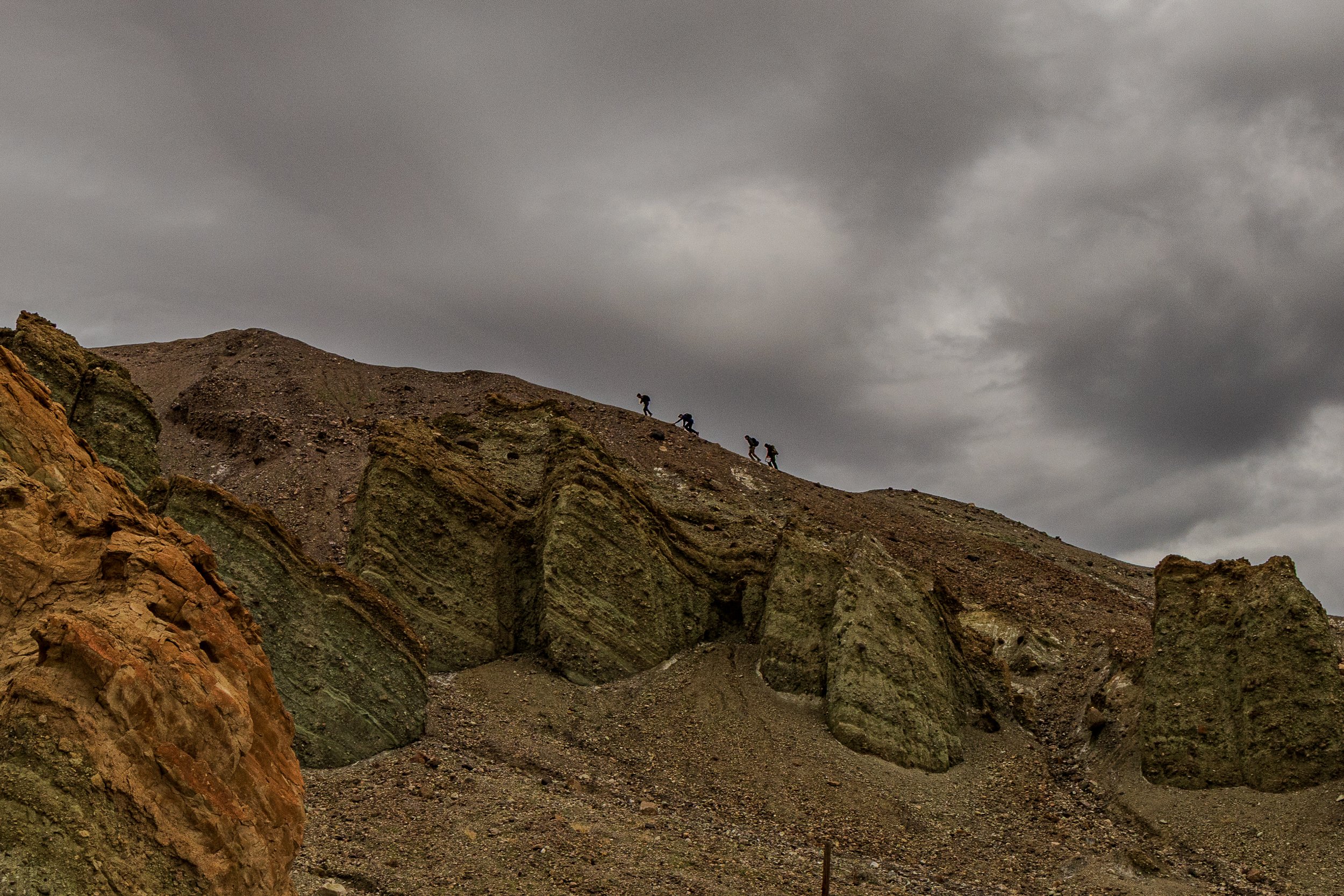
Students exploring the Texas Spring area in Death Valley National Park. This was part of a mapping project for the Winter Field Geology in Death Valley course, January 2026. Photo credit: Gavin McCall, B.S. Geology student, Appalachian State University

Tommy Sorber is a B.S. Geology Major also studying classical guitar performance at Appalachian State University. He is interested in field-based geology, structural processes, and sedimentology. Tommy is a mountaineer and avid outdoorsman. He hopes to pursue a career in mineral exploration involving geologic mapping.
Tommy Sorber (B.S. 2027)
Tommy’s research is funded by 1) a scholarship through the Office of Student Research, and more recently 2) a student research grant through the Cordilleran Section of the Geological Society of America. He is investigating the kinematics of strike-slip faulting in the Alexander Hills, California using original geologic mapping and 3D modeling.
He is building high-resolution 3D mesh surfaces of formations in the area and will create simulations to model the displacement on the faults.
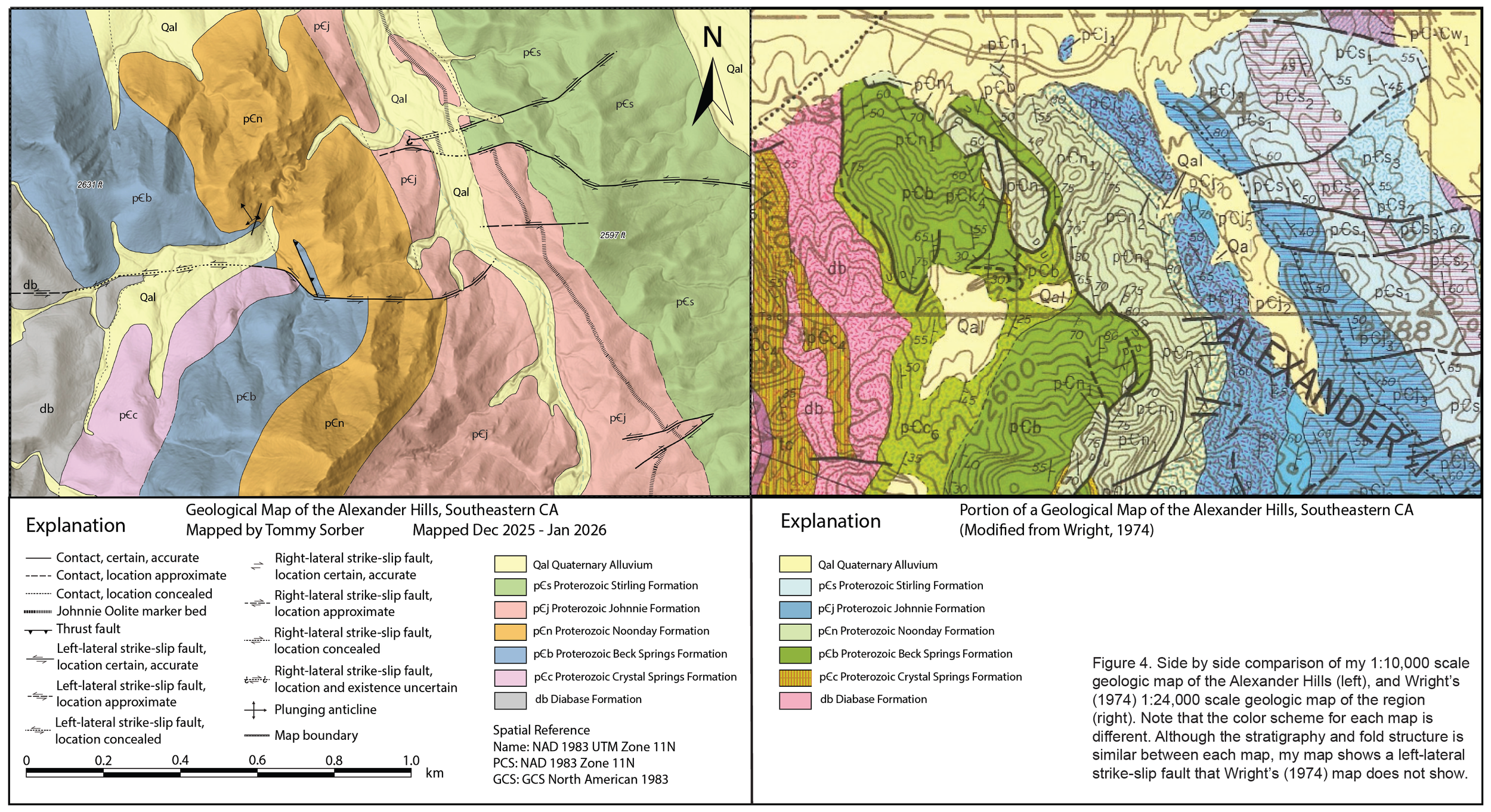
Tommy’s 1:10,000 map (left) digitized in Arc-GIS shows strike-slip faulting previously unrecognized by the old master Lauren Wright (probably because Wright was covering a lot of ground and mapping at 1:24,000)
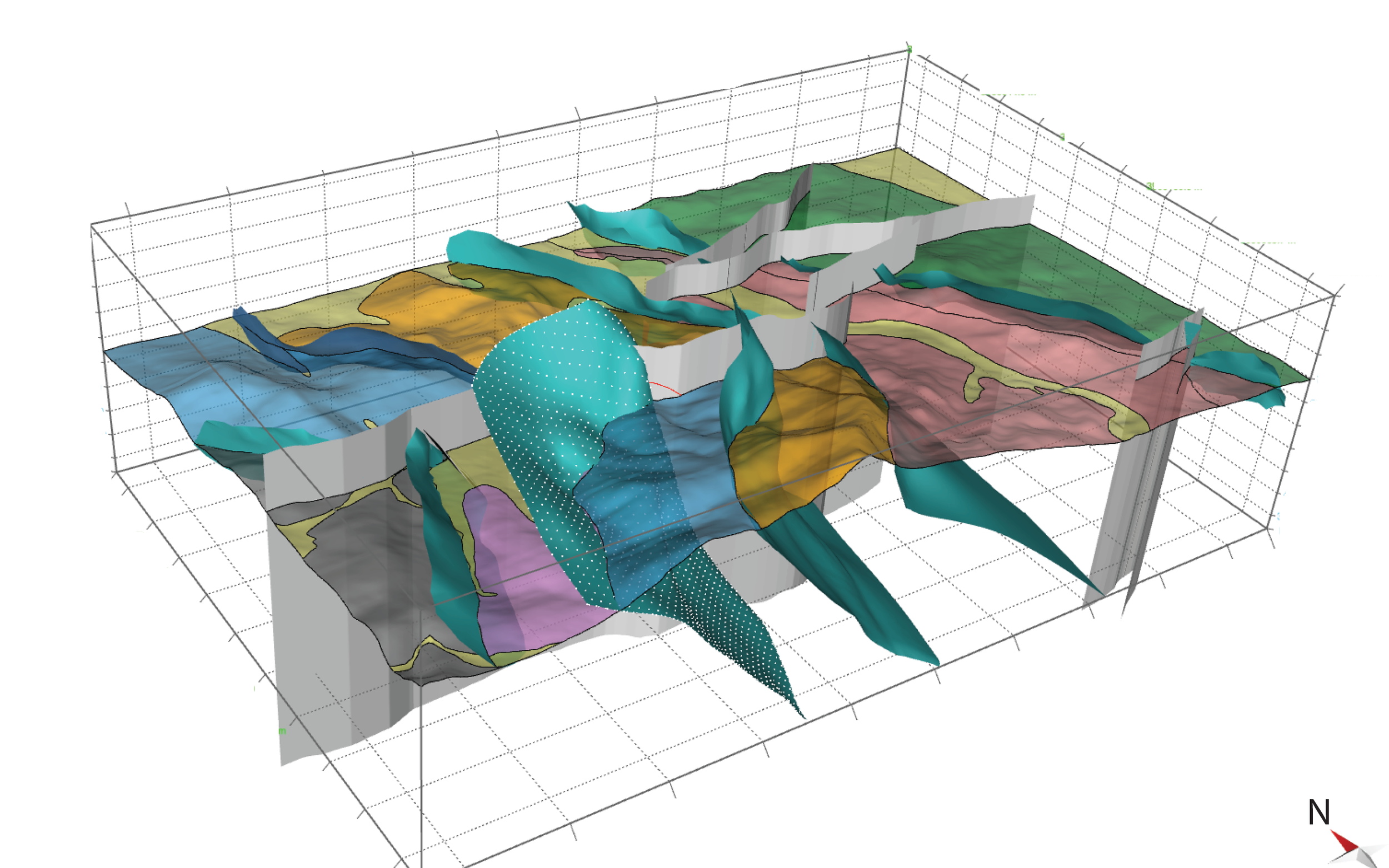
Tommy is working on a 3D model of the region as well as 2D kinematic forward models to simulate the strike-slip faulting.
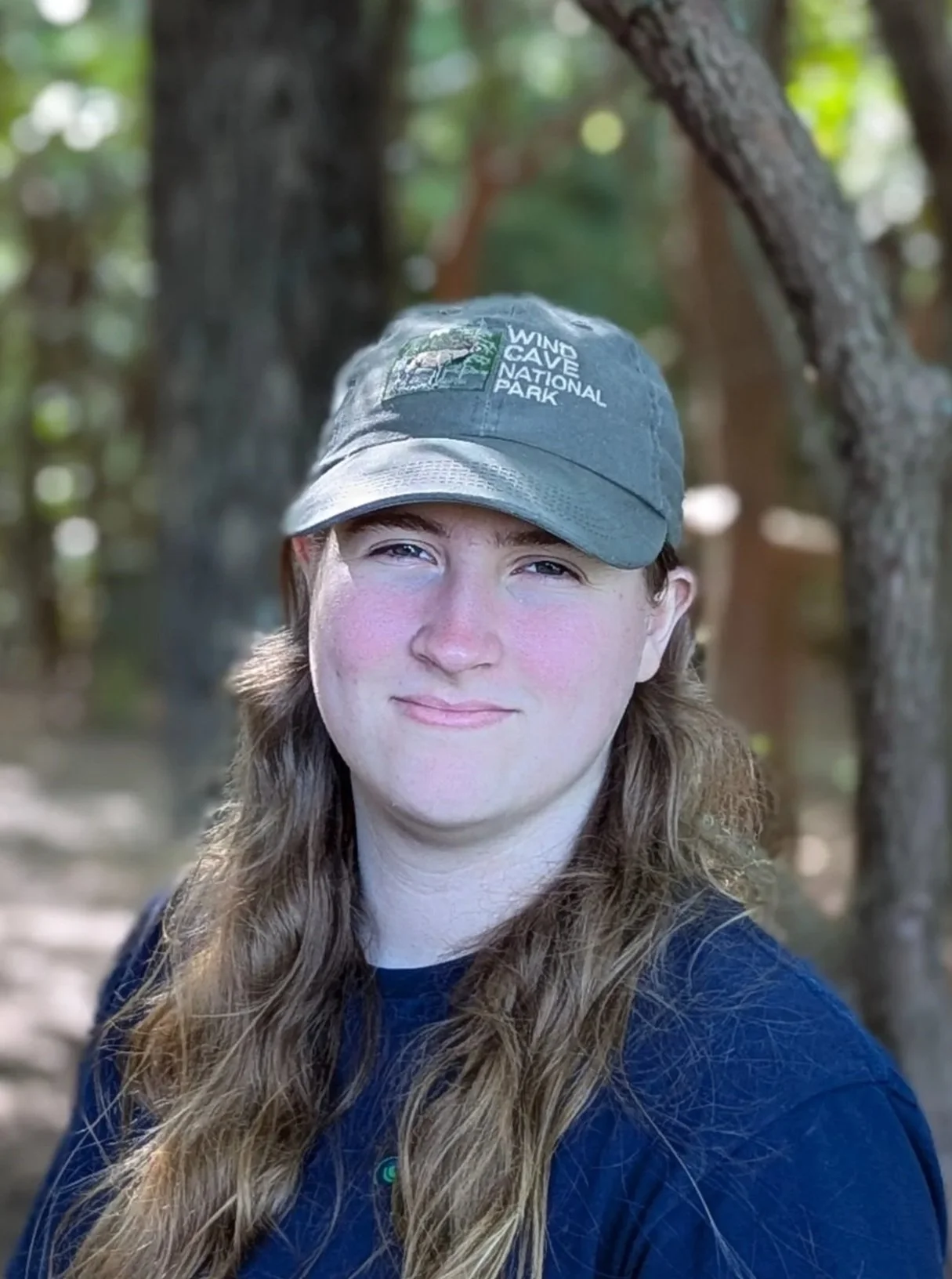
Morgan Cope is a B.S. Geology Major at Appalachian State University. Her passion for geology began with curiosity about the rocks underlying the creek near home. She is working at a geotechnical company in Pittsburgh, PA. She also has experience working as an intern at a rock quarry, overseeing blasts and blast-wall mapping.
Morgan Cope (B.S. 2026)
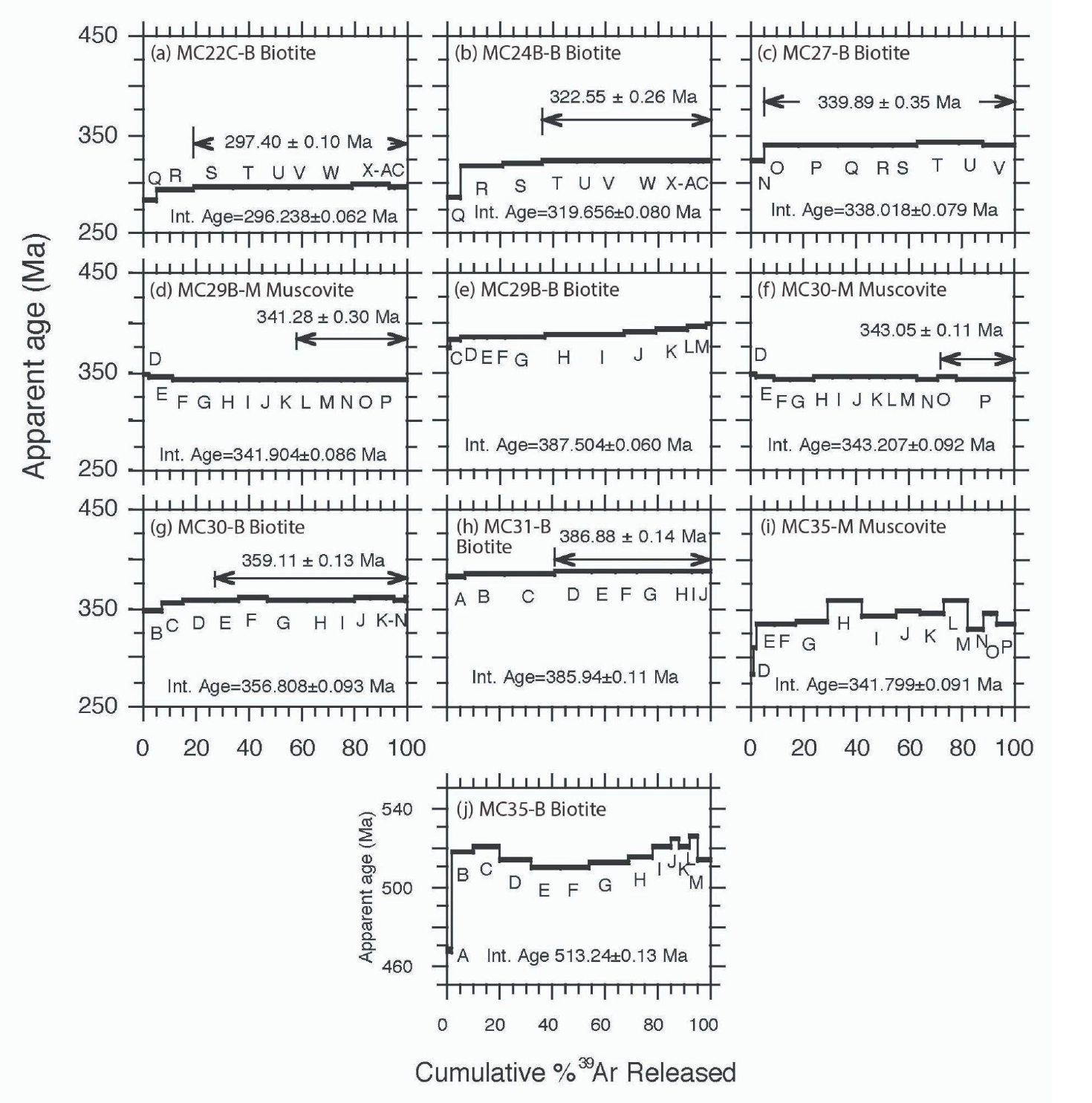
Morgan’s research was funded by a Student and Faculty Excellence (SAFE) grant from the College of Arts and Sciences and a Loren A. Raymond Student Research Scholarship from the Department of Geological Sciences. She used argon thermochronology to investigate the thermal evolution of the Blue Ridge thrust sheet and Piedmont of the southern Appalachian Mountains.
Morgan’s HeFTy modeling of the data (although some are a little messed up biotite spectra) support that the main pulse of exhumation of the Ashe Metamorphic Suite in the Blue Ridge is Acadian to NeoAcadian (ca. 350 Ma). Check it out!
Morgan is now gainfully employed at a geotechnical company in Pittsburgh, Pennsylvania
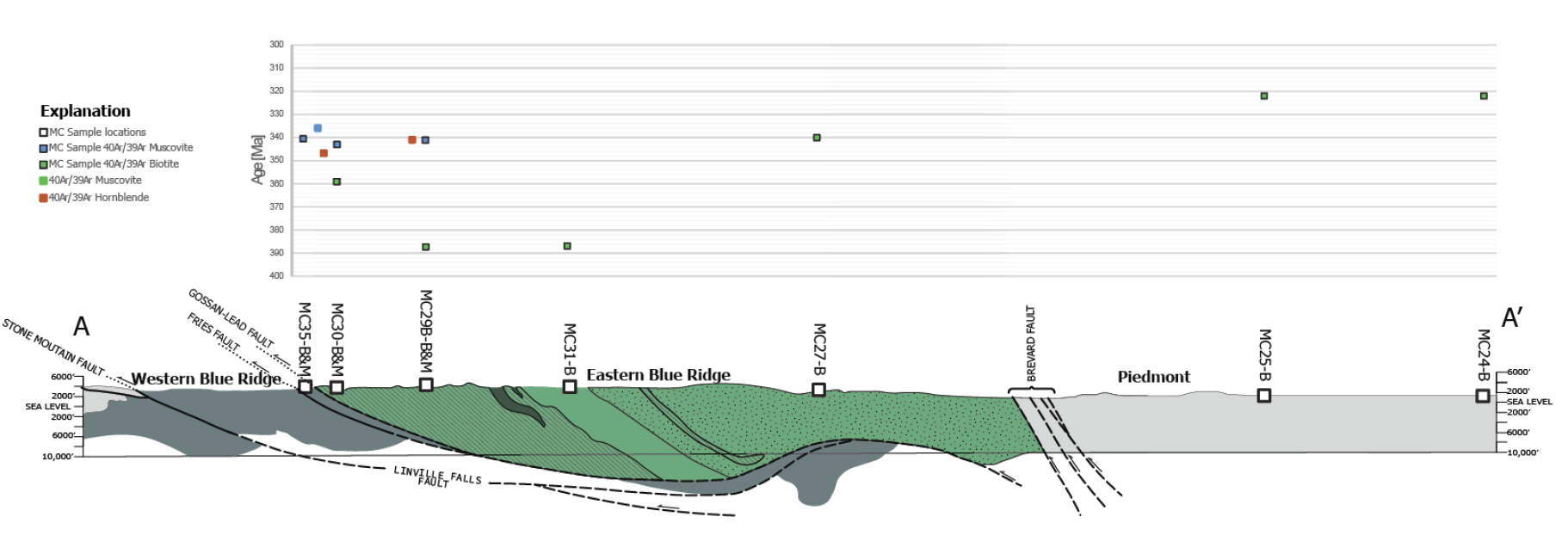
Cross section of the tectonic transect showing the Blue Ridge thrust sheet (green) and sample locations. Modified from Bryant and Reed (1970) and Levine et al. (2018).
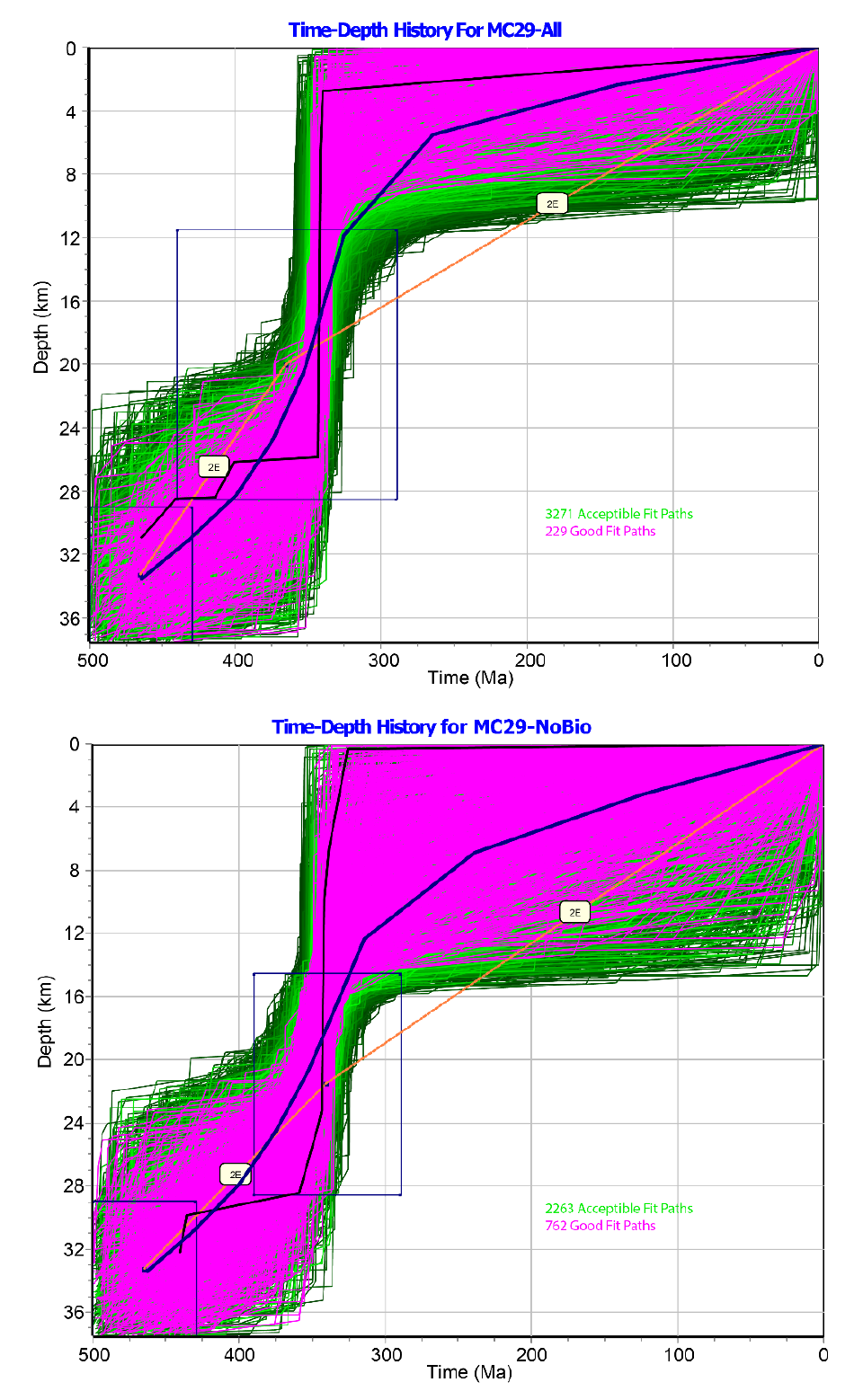
HeFTy models
Can be used to model Argon data if you trick the program into thinking the kinetics of diffusion are a bit different.
Morgan used HeFTy to explore how the muscovite and biotite cooling ages relate to the history of Appalachian Mountain building. We used the built-in 1D thermo-kinematic modeling in the latest HeFTy version. As you can see, the models fully explored the constraints and found that the most suitable exhumation paths involve significant exhumation (>15 km) in Acadian time (ca. 350 Ma).
The exhumation rate between 340-360 Ma for most models is ~0.8-1.2 mm/yr.
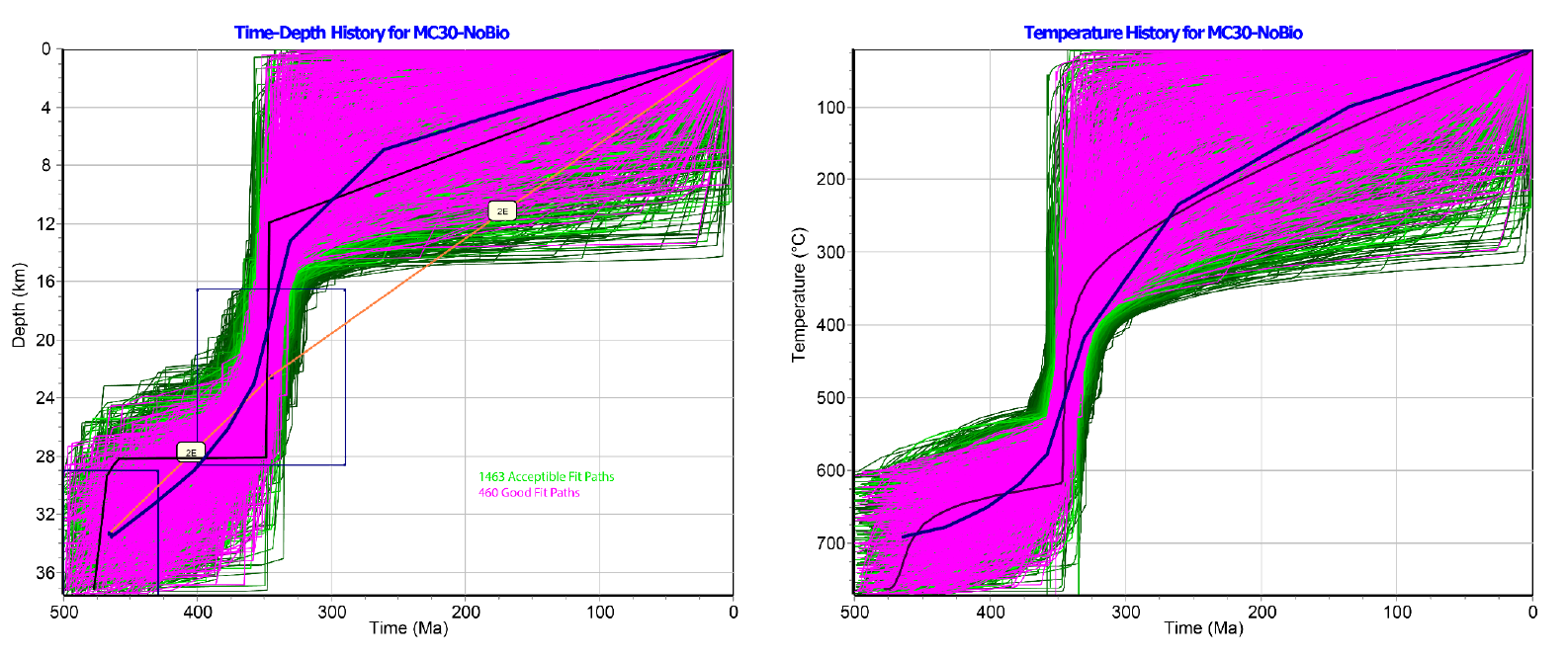
1D thermo-kinematic models
show for most samples of the Ashe Metamorphic suite near Boone, that major exhumation and cooling occurred around 350 Ma.